
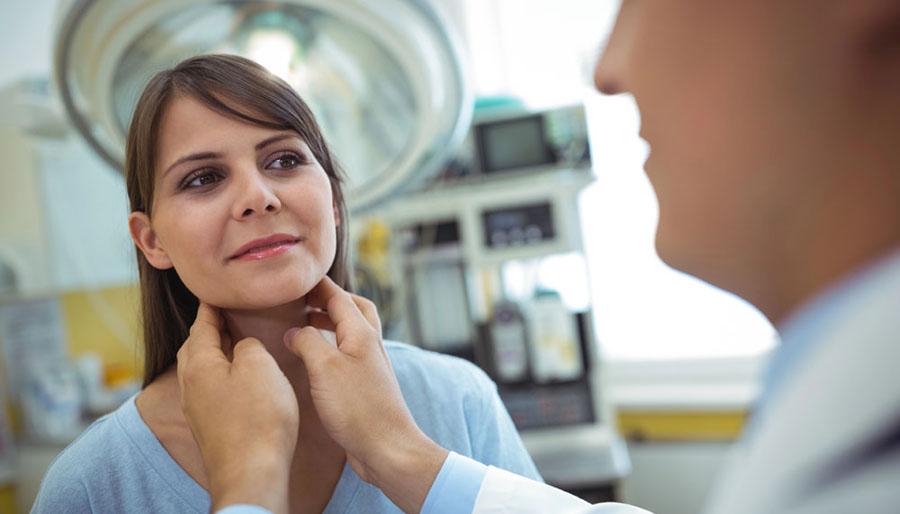
Finding a lump in your neck can be unsettling, especially when your doctor tells you it’s a thyroid nodule. You may immediately wonder whether it’s cancerous, how serious it is, and whether you’ll need surgery to remove it.
Most thyroid nodules are benign. Many cause no symptoms and are discovered during an ultrasound or imaging study performed for an unrelated reason. Even when a nodule is large enough to feel, surgery isn’t always necessary.
At the Los Angeles Sinus Institute, Mani Zadeh, MD, evaluates thyroid and other neck masses to help patients understand their findings and determine whether additional testing, monitoring, or surgical treatment may be appropriate. A nodule’s size matters, but it is only one part of the decision. Its appearance on ultrasound, biopsy results, symptoms, thyroid function, and changes over time often provide more useful information.
What Is a Thyroid Nodule, and Should You Be Concerned?
Your thyroid is a butterfly-shaped gland near the base of your neck. It produces hormones that help regulate metabolism, body temperature, heart rate, and other essential functions.
A thyroid nodule is an abnormal growth or lump within the thyroid gland. Some nodules are solid, others contain fluid, and many have a combination of both. You might notice swelling in the lower part of your neck, but most nodules are too small to feel and cause no symptoms.
Thyroid nodules are common, particularly as adults get older. According to the American Thyroid Association, most are benign, and only a minority are cancerous.
That doesn’t mean a newly discovered lump should be ignored. A proper evaluation helps determine whether the nodule has reassuring features or requires further investigation.
What Makes One Thyroid Nodule More Concerning Than Another?
Two nodules of similar size can have very different levels of risk. One may be a harmless fluid-filled cyst, while another has ultrasound characteristics that warrant a biopsy.
Certain findings deserve closer attention, including:
- A nodule with suspicious ultrasound features, such as irregular margins, punctate echogenic foci, or a taller-than-wide shape
- Enlarged or abnormal lymph nodes in the neck
- A history of radiation exposure to the head or neck, particularly during childhood
- A family history of thyroid cancer or certain inherited cancer syndromes
- Noticeable growth accompanied by concerning symptoms or imaging changes
- Persistent voice changes or a firm neck mass that warrants further examination
These findings don’t automatically mean you have thyroid cancer. They help your physician decide whether additional testing is needed.
How Do Doctors Determine Whether a Thyroid Nodule Needs Surgery?
A thyroid nodule usually doesn’t lead directly to surgery. The first step is understanding what the lump is and whether it is affecting nearby structures or thyroid function.
Your evaluation may include a neck examination, thyroid blood tests, ultrasound imaging, and, when indicated, a fine-needle aspiration biopsy.
Thyroid Ultrasound
Ultrasound is one of the most useful tests for evaluating thyroid nodules. It shows the nodule’s size, whether it is solid or cystic, and features that may raise or lower concern for cancer.
Radiologists may use a reporting system such as ACR TI-RADS to describe the nodule’s appearance and guide decisions about biopsy or follow-up. A suspicious-looking small nodule may deserve more attention than a larger nodule with reassuring features.
Ultrasound can also identify other thyroid nodules and examine nearby lymph nodes.
Thyroid Blood Tests
A thyroid-stimulating hormone (TSH) test helps determine whether your thyroid is functioning normally.
If TSH is low, your physician may recommend a radionuclide thyroid scan to determine whether a nodule is producing excess thyroid hormone. These hyperfunctioning, or “hot,” nodules are rarely malignant and are evaluated differently from nodules that do not produce excess hormone.
Normal thyroid hormone levels, however, do not rule out thyroid cancer. Blood tests and ultrasound provide different kinds of information.
Fine-Needle Aspiration Biopsy
If a nodule meets certain ultrasound and size criteria, a fine-needle aspiration biopsy may be recommended. This procedure uses a thin needle to collect cells for examination by a pathologist.
Results are commonly reported using the Bethesda System for Reporting Thyroid Cytopathology. The categories help estimate the likelihood of malignancy and guide the next step.
A benign result often supports monitoring. An indeterminate result may lead to repeat testing, molecular testing, observation, or surgery, depending on the circumstances. Results suspicious for or consistent with malignancy generally require a more detailed discussion about treatment.
No single test tells the entire story. The findings are considered together before a surgical recommendation is made.
When Is Thyroid Nodule Surgery Recommended?
Most thyroid nodules don’t need to be removed. Thyroid surgery becomes more relevant when testing suggests cancer, the nodule causes significant symptoms, or the thyroid is producing excess hormone that requires definitive treatment.
When a Biopsy Suggests or Confirms Thyroid Cancer
A suspicious biopsy is one of the most common reasons to discuss thyroid surgery.
Bethesda V indicates cytology suspicious for malignancy, while Bethesda VI indicates malignant cytology. These findings often lead to a recommendation for surgery, but the appropriate treatment depends on the diagnosis, tumor size, lymph node findings, and other clinical factors.
Not every thyroid cancer requires immediate removal. Some carefully selected patients with very small, low-risk papillary thyroid cancers may be candidates for active surveillance, which involves scheduled ultrasound examinations and close follow-up.
For other patients, surgery offers the most appropriate way to treat the cancer and determine whether additional treatment is needed.
If your biopsy is suspicious, the next conversation should address more than whether the nodule is cancerous. You should also understand the recommended operation, whether lymph nodes are involved, and what treatment or monitoring may be necessary afterward.
When a Nodule Makes Swallowing or Breathing Difficult
A thyroid nodule can be benign and still cause problems.
As a nodule or enlarged thyroid grows, it may press against nearby structures, including the windpipe and esophagus. You might notice pressure in your lower neck, difficulty swallowing certain foods, or discomfort when lying flat.
Some patients also develop a visible enlargement that changes the contour of the neck. Others experience persistent symptoms that interfere with everyday activities.
When testing shows that a thyroid nodule or goiter is causing significant compression, surgery may be recommended even if the biopsy is benign.
It’s important to establish that the thyroid is actually responsible for the symptoms. Difficulty swallowing and hoarseness can have several causes, and a small nodule discovered on imaging may not explain them.
Seek urgent medical care if you develop significant or rapidly worsening difficulty breathing. A rapidly enlarging neck mass, particularly with breathing or swallowing problems, also requires prompt assessment.
When a Nodule Is Large or Continues to Grow
One of the most common questions patients ask is whether a thyroid nodule becomes dangerous once it reaches a certain size.
There is no universal size at which every nodule must be removed. A nodule measuring 4 centimeters may be managed differently from another nodule of the same size because their biopsy results, ultrasound characteristics, symptoms, and growth patterns differ.
Larger nodules sometimes warrant additional evaluation because they can cause pressure symptoms, affect the appearance of the neck, or raise questions about the reliability of prior testing. However, the evidence regarding false-negative biopsy rates in large nodules is mixed.
A benign nodule that remains stable and causes no symptoms may be monitored rather than removed. If it grows substantially, develops concerning ultrasound features, or begins causing discomfort, your physician may recommend another biopsy or discuss surgery.
Growth alone doesn’t prove that a nodule is cancerous. What matters is how the change fits with the rest of your findings.
When a Nodule Produces Too Much Thyroid Hormone
Some nodules produce thyroid hormone independently of the body’s normal regulatory system. These are called autonomous or hyperfunctioning thyroid nodules.
When they produce enough excess hormone, they can cause hyperthyroidism. Symptoms may include a racing heartbeat, tremors, unexplained weight loss, heat intolerance, and difficulty sleeping.
Medication may help control hormone production or manage symptoms, but it generally doesn’t eliminate the underlying autonomous nodule.
Radioactive iodine and surgery are established definitive treatment options. Surgery may be particularly appropriate when the nodule is large, causes pressure symptoms, or when radioactive iodine isn’t suitable or preferred.
The choice depends on your thyroid function, imaging results, overall health, and treatment preferences.
When Is Monitoring Better Than Thyroid Surgery?
Finding a thyroid nodule doesn’t necessarily mean you need treatment. In many cases, monitoring is the most appropriate approach.
A small nodule with reassuring ultrasound features may not need a biopsy at all. If a biopsy confirms benign findings, follow-up may involve periodic ultrasound examinations to check for meaningful changes.
The timing of those examinations depends on the nodule’s characteristics and the results of previous testing. Some nodules require closer surveillance, while others need little or no additional imaging.
Monitoring isn’t the same as ignoring the problem. It allows your physician to watch for changes without exposing you to the risks of an operation that may never be necessary.
This is especially relevant when a nodule isn’t causing symptoms, thyroid function is normal, and the available testing suggests a low likelihood of cancer.
What If the Biopsy Results Are Unclear?
Not every thyroid biopsy produces a definite benign or malignant result.
Bethesda III and IV findings are considered indeterminate. The cells may have changes that cannot be classified reliably through cytology alone, but that doesn’t mean cancer is present.
Depending on the nodule’s ultrasound features, size, clinical history, and the specific cytology findings, your physician may recommend repeat biopsy, molecular testing, surveillance, or diagnostic surgery.
Molecular tests such as Afirma or ThyroSeq may help refine the estimated risk of malignancy in selected cases. They don’t replace clinical judgment, and their usefulness depends on the circumstances.
If surgery is recommended for an indeterminate nodule, removing one thyroid lobe may provide a definitive tissue diagnosis while preserving the other side of the gland.
Thyroid Lobectomy vs. Total Thyroidectomy: What’s the Difference?
When surgery is recommended, another decision follows: how much of the thyroid needs to be removed?
The answer depends on the diagnosis, the location and extent of the disease, whether both lobes are involved, and the patient’s overall circumstances.
Thyroid Lobectomy
A thyroid lobectomy removes one side of the thyroid gland, generally along with the isthmus, the small band of tissue connecting the two lobes.
This procedure may be appropriate for certain benign nodules, indeterminate nodules, and selected thyroid cancers confined to one lobe.
Because the remaining thyroid tissue may continue producing enough hormone, some patients don’t need lifelong thyroid hormone replacement. Others develop hypothyroidism after surgery and require medication.
A lobectomy also has a different risk profile from total thyroidectomy, particularly regarding permanent low calcium levels caused by injury to the parathyroid glands.
Total Thyroidectomy
A total thyroidectomy removes the entire thyroid gland.
It may be recommended for certain thyroid cancers, extensive disease involving both lobes, or some cases of multinodular goiter and hyperthyroidism.
After a total thyroidectomy, your body can no longer produce thyroid hormone. You’ll need lifelong levothyroxine, with blood tests to monitor hormone levels and adjust the dose.
Total thyroidectomy also carries a greater risk of certain complications, including low calcium levels, compared with removing only one lobe.
More extensive surgery isn’t automatically better. The goal is to choose an operation that adequately treats the condition while avoiding unnecessary risks.
What Are the Risks of Thyroid Surgery?
Thyroid surgery is commonly performed, but it involves delicate structures that play important roles in speaking, breathing, and calcium regulation.
The recurrent laryngeal nerves run close to the thyroid and help control vocal cord movement. Injury to one of these nerves can cause hoarseness or changes in the voice. Injury affecting both sides is uncommon but can cause serious breathing difficulties.
The parathyroid glands, which regulate calcium levels, also lie near the thyroid. If their blood supply or function is affected during surgery, calcium levels may fall. This is more commonly a concern after total thyroidectomy.
Other potential complications include bleeding, infection, scar formation, and the possibility of needing thyroid hormone medication.
Surgeons use careful dissection to identify and preserve important structures. Intraoperative nerve monitoring may also be used to help assess nerve function, although it cannot eliminate the risk of injury.
Before surgery, ask which complications are most relevant to the procedure being recommended and how they are monitored or managed.
What Is Recovery Like After Thyroid Surgery?
Recovery varies depending on the extent of surgery, your overall health, and whether additional procedures are required.
Many patients undergoing uncomplicated thyroid surgery can return home the same day or after an overnight hospital stay. Temporary neck soreness, discomfort when swallowing, and a feeling of tightness around the incision are common early in recovery.
Your surgeon will explain how to care for the incision, when to resume normal activities, and whether any temporary restrictions are necessary.
Voice changes should also be discussed during follow-up. Mild hoarseness can occur after surgery for several reasons, but persistent or significant changes may need further evaluation.
If you’ve had a total thyroidectomy, you’ll begin thyroid hormone replacement. After a lobectomy, blood tests help determine whether the remaining gland is producing enough hormone.
Recovery involves more than allowing the incision to heal. Appropriate follow-up is important for monitoring thyroid function, reviewing final pathology results, and identifying any complications.
Why See Mani Zadeh, MD, for a Thyroid Nodule Evaluation?
A thyroid nodule can raise several questions at once. Is the lump harmless? Does it need a biopsy? Could it be causing your swallowing symptoms? And if surgery is recommended, how much of the thyroid should be removed?
These decisions benefit from an evaluation that considers the thyroid itself and the surrounding structures of the neck.
Mani Zadeh, MD, is a board-certified otolaryngologist and head and neck surgeon. He completed his general surgery internship and otolaryngology and head and neck surgery residency at Columbia University.
At the Los Angeles Sinus Institute, Dr. Zadeh evaluates head and neck concerns, including thyroid nodules and neck masses. His surgical background provides a foundation for assessing conditions involving the thyroid, airway, and nearby structures.
During an evaluation, your symptoms, examination findings, and available imaging or biopsy reports can help guide the discussion. Some nodules need continued monitoring, while others warrant further testing or consideration of surgery.
The objective is to understand why a particular approach is being recommended, including the potential benefits and limitations of treatment.
Frequently Asked Questions About Thyroid Nodule Surgery
How Do I Know if My Thyroid Nodule Is Cancerous or Needs Surgery?
You usually can’t determine whether a thyroid nodule is cancerous by how it feels or whether it causes symptoms. Ultrasound findings and, when indicated, fine-needle aspiration biopsy help estimate the risk of malignancy. Surgery may be recommended for suspicious or malignant findings, significant pressure symptoms, or other clinical concerns, but many benign nodules can be monitored.
What Size Thyroid Nodule Requires Surgical Removal?
There is no single size that automatically requires thyroid surgery. Nodules measuring 3 or 4 centimeters or more may deserve closer evaluation, particularly if they’re growing or causing symptoms, but some larger benign nodules can be monitored safely. Ultrasound characteristics, biopsy findings, thyroid function, and symptoms are more informative than size alone.
Can a Thyroid Nodule Go Away Without Surgery?
Some thyroid cysts may shrink or change over time, but many solid nodules remain present even when they’re benign. A nodule doesn’t necessarily need to disappear to be considered safe to monitor. Your physician can recommend follow-up based on its appearance, size, symptoms, and test results.
What Is the Difference Between a Thyroid Lobectomy and a Total Thyroidectomy?
A thyroid lobectomy removes one lobe of the thyroid, generally with the isthmus. A total thyroidectomy removes the entire gland. A lobectomy may be appropriate when disease is limited to one side, while total thyroidectomy may be recommended for certain cancers or conditions involving both lobes. The choice depends on your diagnosis and surgical goals.
Will I Need Thyroid Hormone Medication for Life After Surgery?
You’ll need lifelong thyroid hormone replacement after a total thyroidectomy because the gland has been completely removed. After a lobectomy, some patients continue producing enough hormone naturally, while others need levothyroxine. Follow-up blood tests help determine whether medication is necessary.
What Are the Risks of Thyroid Surgery, and How Are My Vocal Cords Protected?
Potential risks include bleeding, infection, voice changes, low calcium levels, and injury to structures near the thyroid. Surgeons use careful techniques to identify and preserve the nerves involved in vocal cord movement. Nerve monitoring may also be used during some operations, but it doesn’t eliminate the possibility of nerve injury.
Can I Avoid Surgery if My Thyroid Biopsy Is Benign?
Often, yes. If your biopsy is benign, the ultrasound findings are reassuring, and the nodule isn’t causing significant symptoms, monitoring may be appropriate. Surgery can still be considered if the nodule causes pressure, grows substantially, or creates other clinical concerns. Your physician can explain which findings matter in your case.
When Should I Be Concerned About a Thyroid Lump?
A new or changing neck lump should be evaluated, particularly if it is accompanied by persistent hoarseness, difficulty swallowing, or enlarged neck lymph nodes. These symptoms don’t necessarily mean cancer, but they deserve medical attention. Significant breathing difficulty or a rapidly enlarging neck mass with breathing symptoms requires urgent care.
How Do I Schedule a Thyroid Nodule Evaluation With Mani Zadeh, MD?
Contact the Los Angeles Sinus Institute to request an appointment with Dr. Mani Zadeh. If you’ve already had thyroid blood tests, an ultrasound, or a biopsy, ask whether you should bring the reports and images to your visit. Reviewing previous findings can help guide the evaluation and discussion of next steps.
Check out our blog for more resources.
Schedule a Thyroid Nodule Evaluation With Mani Zadeh, MD
Being told you have a thyroid nodule doesn’t mean surgery is inevitable. Many nodules remain harmless and can be monitored, while others need closer investigation because of suspicious findings, growth, or symptoms.
If you’ve noticed a lump in your neck, received an abnormal thyroid ultrasound, or been advised to consider surgery, understanding the reason behind that recommendation is an important first step.
At the Los Angeles Sinus Institute, Dr. Mani Zadeh provides head and neck evaluations to help patients understand their findings and discuss appropriate next steps.
Contact the Los Angeles Sinus Institute to schedule your thyroid nodule consultation with Dr. Zadeh in Los Angeles.
Disclaimer: This article provides general information about thyroid nodules and surgical treatment. It is not a substitute for medical advice. The need for biopsy, monitoring, or surgery depends on your individual findings and health history. Consult a qualified medical professional for an evaluation and treatment recommendations.