
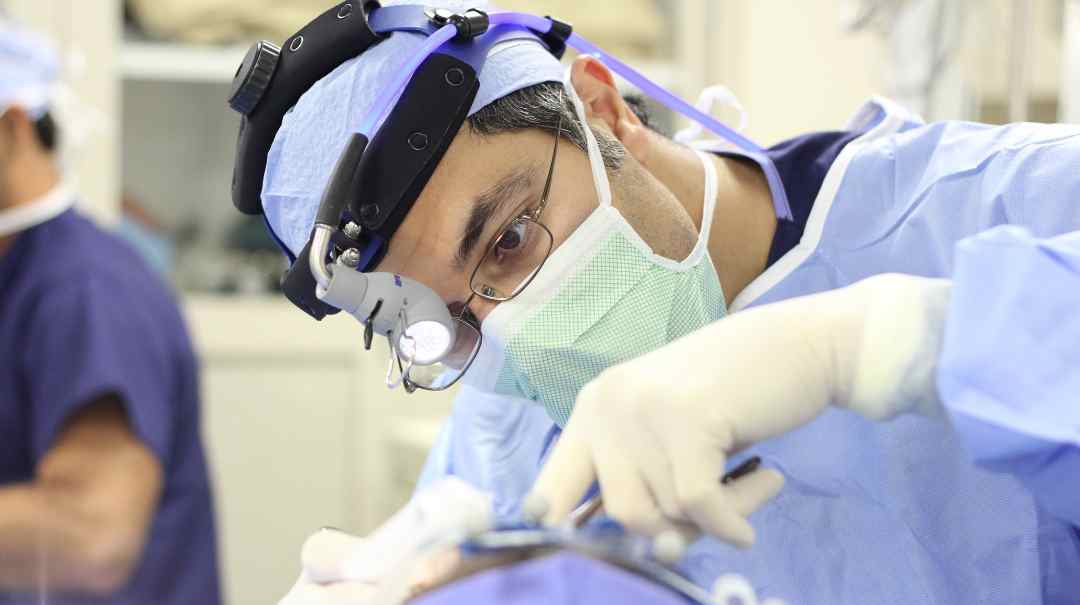
Finding relief for sinus conditions through strategic endoscopic surgery.
Blocked sinus pathways caused by polyps, bacteria, scar tissue, or damaged nasal structures can interfere with your daily activities, making it difficult to concentrate, sleep or perform work duties. Often, these types of obstructions do not respond to medications or minimally invasive procedures, in which case endoscopic sinus surgery may be warranted. Dr. Zadeh performs cutting-edge sinus surgery in Los Angeles to help improve your breathing as well as your quality of life.
What Is Endoscopic Sinus Surgery?
Blockages in the sinuses can lead to sinusitis, a condition in which the mucus membranes of the sinuses become inflamed and swollen, causing pain, pressure, and impaired breathing. Sinusitis that persists for three months or more is considered chronic.
The most common procedure for the treatment of chronic sinusitis is endoscopic sinus surgery. This procedure is performed to unblock the sinuses when drug therapy is not effective or when sinusitis complications exist, such as structural abnormalities, the spread of infection into the eye, or fungal sinusitis. To see the full range of surgical and non-surgical treatments offered for chronic sinus disease, visit our sinus surgery page.
How Is Endoscopic Sinus Surgery Performed?
In endoscopic sinus surgery, fiber-optic surgical techniques are utilized to open the natural drainage areas of the sinuses and to remove polyps, if any are present. Endoscopic sinus surgery unblocks obstructions, allowing ventilation and drainage. This provides relief from sinus headaches and congestion, improves nasal breathing, and often enhances the patient’s sense of smell.
The goals of endoscopic sinus surgery include:
- Reduction of the number and severity of sinus infections
- Improvement of symptoms associated with sinusitis
- Improvement of airflow through the nose
- Improvement of the patient’s sense of smell
What Types of Sinus Surgery Does Dr. Zadeh Perform?
Endoscopic sinus surgery is not a single fixed procedure. The specific surgical approach depends on which sinuses are involved, the extent of disease, and the patient’s anatomy. At Zadeh MD, the following sinus procedures are performed:
- Maxillary antrostomy: Opening the maxillary sinus drainage pathway, the most commonly treated sinus in chronic sinusitis
- Anterior ethmoidectomy: Removal of diseased ethmoid air cells in the front of the sinus cavity
- Posterior ethmoidectomy: Extension of ethmoid surgery toward the sphenoid sinus when disease extends further back
- Frontal sinusotomy: Opening the frontal sinus drainage pathway to relieve chronic frontal sinus pressure and infection
- Sphenoidotomy: Accessing the sphenoid sinus, located at the back of the skull base, for deep sinus disease
- Nasal polypectomy: Removal of inflammatory nasal polyps obstructing the sinus passages
Most patients require treatment of two to four sinus regions during a single surgical session. Dr. Zadeh will review your CT scan and nasal endoscopy findings to determine exactly which sinuses require treatment and the most conservative, effective approach for your case.
What Is Dr. Zadeh’s Approach to Surgery?
At Los Angeles Sinus Institute, Dr. Zadeh uses CT imaging and computers intraoperatively to minimize risk. Intraoperative CT guidance, or computer-aided surgery, allows Dr. Zadeh to not only view the “live images” of the procedure but also, at the same time, to have a real-time, three-dimensional CAT scan image of the area being operated on. Intraoperative image-guidance provides important anatomic information, allowing better insight into the operative field, decreasing the risks, and improving the results of surgery.
What are the steps in Endoscopic Sinus Surgery?
- You will receive general anesthesia to ensure your total comfort and relaxation during surgery.
- A thin camera rod with a light at the end to provide visualization and magnification (endoscope) is used for direct visualization of the nasal cavity and sinuses.
- Adjacent to the screen with the live images from the endoscope is a second screen with real-time three-dimensional CAT scan images of the surgical area.
- Working endoscopically through the nose, Dr. Zadeh uses specialized instruments to safely and effectively remove causes of sinus blockage, such as nasal polyps, diseased bone, diseased tissue, or scar tissue.
- Under direct visualization and CT guidance, the natural drainage pathways of the sinuses are opened.
- The patient is allowed to recover from the effects of general anesthesia and then discharged.
Dr. Zadeh is one of the most trusted ear, nose, and throat specialists in Los Angeles, having garnered a reputation for excellence, compassion, and integrity, along with a technologically advanced surgical approach.
What Are the Benefits of Sinus Surgery?
For individuals suffering from chronic sinusitis, image-guided endoscopic sinus surgery in Los Angeles can have a number of benefits, including:
- Fewer sinus infections and sinus headaches
- Less pressure and facial pain
- Widened airways for easier administration of medications
- Improved quality of life
If you are suffering from chronic sinusitis, schedule an initial consultation at Los Angeles Sinus Institute. Taking all medical therapies and surgical techniques into consideration, Dr. Zadeh can determine if endoscopic sinus surgery is the most effective and appropriate treatment option for you.
Here Are 5 Important Benefits of Sinus Surgery:
- Helps prevent future sinus infections – Chronic sinus infections can diminish your quality of life over time. With surgery, your breathing will improve, and you will finally be free from nasal pressure, a runny nose and recurring headaches.
- Improved sense of smell – Sinus surgery can help restore your enjoyment of daily living. Our sense of smell is inextricably linked to emotion, so when we can’t breathe properly, we may feel depressed and anxious.
- Diminished facial pain – The pain associated with sinusitis can be tremendous. You may feel pressure on the roof of the mouth, at the bridge of the nose, in the teeth, or covering the entire face. Sinus surgery can help relieve these symptoms so you can concentrate on what really matters: living your best life.
- Clears a pathway for sprays and rinses to be more effective – If sinus inflammation does flare up from time to time after your surgery, you will be able to treat it more effectively. Surgery can help widen the nasal pathways so that medications can better reach the lining of the sinuses.
- Improved sleep – Sinus headaches can keep you awake at night, leading to chronic exhaustion and fatigue. Sinus surgery can help you to get enough oxygen and to rest better at night so you can be more alert and productive with your time.
Who Makes a Good Candidate for Endoscopic Sinus Surgery?
If your sinus problems are chronic and not just occasional, you may be suffering from nasal blockages such as polyps or structural anomalies that are making it difficult to breathe and sleep. Unlike medications and other non-invasive techniques, endoscopic sinus surgery in Los Angeles can help get to the root cause of your pain, permanently clearing away nasal debris so you can regain your quality of life.
Dr. Zadeh will perform an in-depth evaluation of your nose during your private Los Angeles consultation, at which time he will make his best recommendations for a personalized treatment plan that resolves all your breathing concerns.
Endoscopic Sinus Surgery vs. Balloon Sinuplasty
Patients with chronic sinusitis sometimes have to decide between endoscopic sinus surgery and balloon sinuplasty. While both procedures aim to restore sinus drainage, they are not interchangeable. Understanding the difference helps patients ask the right questions during their consultation.
- Balloon sinuplasty uses a small inflatable catheter to dilate sinus openings without removing tissue. It is best suited for mild-to-moderate disease without significant polyps or structural complexity.
- Endoscopic sinus surgery uses instrumentation to remove diseased tissue, bone, or polyps and open sinus pathways more extensively. It is appropriate for moderate-to-severe sinusitis, nasal polyps, and anatomical obstruction.
- Balloon sinuplasty cannot treat the ethmoid sinuses. Endoscopic sinus surgery can address all sinus groups, including the ethmoids.
- In some cases, both approaches can be combined in the same surgical session.
Dr. Zadeh will recommend the most appropriate procedure based on your CT findings, the extent of your sinus disease, and your goals. Neither procedure is universally superior, as the right choice depends entirely on your anatomy and diagnosis. For a closer look at how balloon sinuplasty works and who it is best suited for, see our dedicated balloon sinuplasty guide.
Revision Sinus Surgery in Los Angeles
Not every sinus surgery fully resolves a patient’s symptoms. Scar tissue, recurrent nasal polyps, incomplete removal of diseased tissue, or unaddressed anatomical variations can all cause symptoms to return after a procedure performed elsewhere. When this happens, revision sinus surgery can reopen blocked pathways and restore normal sinus drainage.
Dr. Zadeh has extensive experience with revision sinus surgery, including cases involving patients who had unsuccessful procedures at other practices. Revision surgery is generally more complex than a first-time procedure because prior surgery can alter normal anatomy and increase surgical risk. Intraoperative CT image guidance is especially valuable in these cases, helping Dr. Zadeh navigate altered anatomy safely and identify the structures still contributing to blockage. Learn more about what to expect during revision sinus surgery, including candidacy and recovery differences.
One of the most common causes of recurring symptoms after sinus surgery is scar tissue forming inside the nasal passages. Our team has written in detail about how scar tissue can form after sinus surgery and contribute to recurring blockages. If your symptoms returned after a previous procedure, a revision evaluation with Dr. Zadeh can help determine whether scar tissue, missed disease, or another factor is responsible.
What Can I Expect From My Recovery
This surgery is performed under general anesthesia, and you will sleep through it. Immediately after the surgery, you will spend a few hours in the recovery room while the anesthesia wears off until you are fully awake and feeling well enough to go home.
There will be red-colored drainage from your nose after the surgery. In the first few days, you can expect the amount of drainage to decrease and the color to become lighter, although you may have blood-tinged drainage for 10 to 14 days.
You may have a feeling of congestion and fullness in your sinuses because of temporary swelling of the tissues in the nasal cavity resulting from the surgery. Sleep with your head elevated higher than your heart to assist in reducing swelling.
Do not blow your nose for 14 days after the surgery. (You may gently sniff back nasal secretions.) After your first post-operative visit, you will begin saltwater nasal flushes with a solution we prescribe for you. Sneeze with your mouth open, and do not hold back a sneeze.
Avoid all strenuous activity for 2 weeks after the surgery. Do not bend over, lift objects weighing more than 20 lbs, or perform jogging, aerobics, swimming, exercising, or contact sports. Walking for moderate exercise is acceptable. Do not smoke, and avoid secondhand smoke or any other irritating fumes.
What Is the Cost of Endoscopic Sinus Surgery in Los Angeles?
When sinus surgery is medically necessary, it may be covered by your insurance carrier. We can help you to file a claim. If your insurance does not cover the procedure, we can assist you in securing financing from trusted healthcare lenders so that you can improve your breathing as soon as possible. During your consultation, we will provide you with an in-depth quote for services that include facility fees, surgeon’s fee, anesthesia fees, and recovery fees. While endoscopic sinus surgery may be more costly than other methods of pain relief, it can lead to lasting changes that improve your well-being, mood, and productivity.
Why Choose Dr. Zadeh?
Dr. Zadeh is one of the most trusted Ear, Nose, and Throat specialists in Los Angeles, having garnered a reputation for excellence, compassion, and integrity, along with a technologically advanced surgical approach. After graduating from UCLA with honors, Dr. Zadeh received his medical degree from the University of California at San Diego. He completed a general surgery internship as well as a residency in otolaryngology at the elite Columbia University in New York City.
- Subspecialty rhinologist with dedicated focus on nasal and sinus disease — not a general ENT practice
- Uses real-time intraoperative CT image guidance during surgery, a technology not available at all ENT practices
- Performs the most conservative procedure appropriate for each patient’s specific disease extent — not a one-size-fits-all surgical approach
- Offers the full spectrum of sinus treatments: medical management, balloon sinuplasty, FESS, revision sinus surgery, and nasal polyp surgery
- Has performed complex revision sinus surgery for patients who had unsuccessful procedures elsewhere
To schedule a consultation and discuss whether endoscopic sinus surgery is right for you, contact Zadeh MD at 310-286-0123 or request an appointment online.
Patient Testimonial
If there was a possible 10 stars, I would give Dr. Zadeh a 10!! Dr. Zadeh has got to be the best ENT I have ever encountered hands down!! I suffered for 3 years with sinus infections and after medication (steroids and antibiotics) failed numerous times I decided to go through with Endoscopic sinus surgery. I was very hesitant about surgery and had a fear of going under as it was my 1st time. I got 3 different opinions and chose Dr. Zadeh because he is very caring, kind, personable, very knowledgeable and trust-worthy! My surgery went well and recovery was smooth. He did such a clean job; my family couldn’t even tell I had surgery. All the girls at his office are great too! Very professional team with outstanding customer service. 🙂 Thank You Dr. Zadeh for everything! You are truly gifted by God 🙂
– Diana D.
Endoscopic Sinus Surgery FAQs
Endoscopic sinus surgery is typically recommended when chronic sinusitis does not improve with medication or when structural blockages, such as nasal polyps or a deviated septum, are contributing to persistent infections. It is also used when sinus disease has spread toward the eye or when fungal sinusitis is present. Dr. Zadeh evaluates CT imaging and nasal endoscopy findings to confirm surgery is the appropriate next step before recommending it.
Patients often experience fewer sinus infections, reduced facial pressure and pain, easier nasal breathing, and improved sense of smell after surgery. Many also find that nasal sprays and rinses work more effectively once the sinus pathways are open. Individual results vary based on the extent of disease and overall sinus anatomy.
The procedure is performed under general anesthesia using a thin, lighted endoscope for direct visualization inside the nose and sinuses. Dr. Zadeh uses real-time CT image guidance alongside the endoscope to safely remove polyps, diseased tissue, or bone that is blocking the sinus drainage pathways. Once the pathways are opened, the patient recovers from anesthesia and is typically discharged the same day.
Most patients experience blood-tinged nasal drainage for 10 to 14 days and are asked to avoid blowing their nose during that time. Strenuous activity, heavy lifting, and contact sports should be avoided for about two weeks. Saline nasal rinses typically begin after the first post-operative visit to support healing.
Many patients notice improved breathing, reduced sinus pressure, and fewer infections after recovering from surgery. The degree of improvement depends on factors like the extent of disease before surgery and how closely post-operative care instructions are followed. Dr. Zadeh discusses realistic expectations for each patient’s specific case during consultation.
When endoscopic sinus surgery is medically necessary, it is often covered by insurance, and our office can help with filing a claim. Coverage details vary by plan, so we recommend confirming benefits with your insurance carrier before scheduling. Financing may also be available for patients.
Balloon sinuplasty uses a small inflatable catheter to widen sinus openings without removing tissue, making it suitable for milder cases without significant polyps. Endoscopic sinus surgery removes diseased tissue, bone, or polyps and can treat all sinus groups, including the ethmoid sinuses, which balloon sinuplasty cannot reach. Our balloon sinuplasty guide covers this comparison in more detail.
Because the procedure is performed under general anesthesia, patients are usually asked to stop eating and drinking for a set period beforehand, typically starting at midnight the night before surgery. Specific fasting instructions are provided during the pre-operative appointment. Following these instructions closely helps reduce anesthesia-related risks.
Many patients do not require traditional nasal packing after endoscopic sinus surgery, though this depends on the extent of the procedure. Some cases use dissolvable packing or small splints that do not need to be removed. Dr. Zadeh explains what to expect for each patient’s specific surgical plan.
Most patients take about one to two weeks off work, depending on the physical demands of their job and the extent of surgery. Office-based work can often resume sooner than jobs requiring heavy lifting or strenuous activity. Dr. Zadeh provides personalized guidance on timing during follow-up visits.