
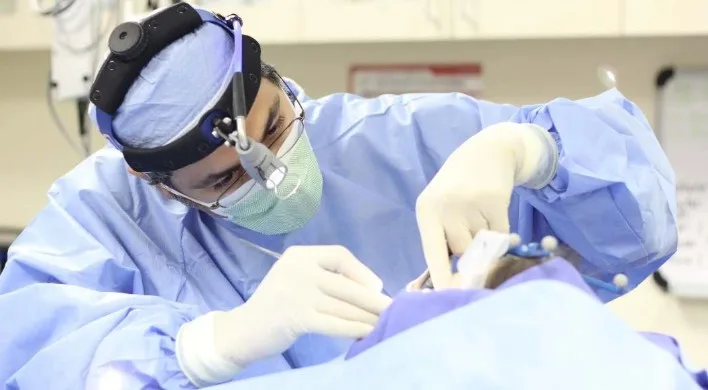
Dr. Mani H. Zadeh, M.D., F.A.C.S., is a board-certified otolaryngologist and head and neck surgeon who performs thyroid surgery for conditions including thyroid cancer, large goiters, recurring thyroid cysts, and hyperthyroidism that does not respond to medication.
Schedule a Thyroid Consultation
If you have been diagnosed with a thyroid nodule, goiter, or thyroid condition that may require surgery, Dr. Zadeh can review your findings and discuss your treatment options.
When Thyroid Nodules or Conditions Require Surgery
Surgery is one option for treating thyroid conditions. Dr. Zadeh reviews your medical and surgical options with you and builds a treatment plan around your needs. Thyroid surgery is often used to treat:
- Thyroid cancer
- Large goiters that cause difficulty breathing or swallowing
- Thyroid cysts that return after repeated drainage
- Hyperthyroidism that does not respond to medication
If you have been told you have a thyroid nodule or are not sure whether surgery is right for you, call 310-286-0123 to talk with Dr. Zadeh’s team.
Dr. Zadeh performs thyroid ultrasounds during consultations to examine the size, location, and characteristics of thyroid nodules. Ultrasound can help identify features that raise concern for cancer, although a fine-needle aspiration biopsy or other testing may be needed to determine whether a nodule is malignant.

Types of Thyroid Surgery Dr. Zadeh Performs
Thyroid surgery may remove one side of the thyroid gland or the entire gland. The right choice depends on the type and extent of your thyroid disease.
Hemithyroidectomy
A hemithyroidectomy, also called a thyroid lobectomy, removes one lobe of the thyroid gland. It may be recommended for certain thyroid nodules, growths limited to one side of the gland, or selected low-risk thyroid cancers.
Because the remaining lobe continues producing thyroid hormones, some patients maintain normal thyroid function without medication. Others may need thyroid hormone replacement after surgery. The decision to remove one lobe or the entire gland depends on the diagnosis and the extent of thyroid disease.
Total thyroidectomy
A total thyroidectomy removes the entire thyroid gland. It may be recommended for larger thyroid cancers, cancers involving both sides of the thyroid, or disease that has spread beyond the gland. Some patients with smaller, low-risk thyroid cancers may be candidates for hemithyroidectomy instead. The appropriate procedure depends on the diagnosis, imaging findings, and extent of disease.
Neck dissection
When thyroid cancer has spread, Dr. Zadeh may also remove lymph nodes from the neck. This is called a neck dissection. The goal is to remove the lymph nodes the cancer has spread to.
Thyroid Surgery Techniques and Technology
Dr. Zadeh uses a harmonic scalpel, an ultrasonic surgical instrument that cuts tissue and helps control bleeding. It supports precise dissection through a relatively small neck incision. The surgical approach and incision size depend on the patient’s anatomy and the extent of surgery required.


What to Expect Before, During, and After Thyroid Surgery
Before Surgery
Before recommending thyroid surgery, Dr. Zadeh evaluates your symptoms, medical history, imaging, and any previous thyroid testing. A thyroid ultrasound helps assess the size and characteristics of nodules, while blood tests provide information about thyroid function. Some patients also need a fine-needle aspiration biopsy to investigate a suspicious nodule.
Once surgery is recommended, Dr. Zadeh will explain which procedure is appropriate, what it involves, and what you can expect afterward. Your surgical team will provide instructions about medications, eating and drinking before anesthesia, and preparing for your procedure.
Patients with existing voice changes or certain thyroid conditions may also need an examination of their vocal cords before surgery.
During Surgery
Dr. Zadeh makes a small incision in the neck. The thyroid gland sits close to the recurrent laryngeal nerves, which control vocal cord movement. To help protect these nerves, Dr. Zadeh monitors nerve function throughout the procedure. A NIM EMG endotracheal tube with tracing electrodes connects to an EMG monitor, so the laryngeal nerve is continuously monitored. Nerve monitoring is especially useful for patients who have had prior thyroid surgery and for cases where thyroid cancer sits close to the nerve.
After Surgery
Following thyroid surgery, patients are monitored as they recover from anesthesia. The medical team checks the incision, breathing, voice, and overall condition before determining when discharge is appropriate.
Some patients return home the same day, while others require overnight observation. This depends on the extent of surgery, medical history, and postoperative recovery.
Mild neck soreness, discomfort when swallowing, and temporary voice changes can occur during early healing. Patients receive instructions about incision care, activity restrictions, medications, and follow-up appointments.
After total thyroidectomy, lifelong thyroid hormone replacement is necessary. Patients who undergo hemithyroidectomy may retain enough thyroid function without medication, although blood tests are needed to determine whether supplementation is required.
Risks of Thyroid Surgery
Thyroid surgery is generally safe when performed by an experienced surgeon, although complications can occur. These include bleeding, infection, temporary or permanent voice changes, and low calcium levels.
The recurrent laryngeal nerves run close to the thyroid gland and control vocal cord movement. Injury to these nerves may cause hoarseness or changes in voice strength. Dr. Zadeh uses intraoperative nerve monitoring to help assess nerve function during surgery, although monitoring cannot eliminate the possibility of nerve injury.
The parathyroid glands, which regulate calcium levels, are also located near the thyroid. They can be temporarily affected during surgery, particularly after total thyroidectomy. Some patients need calcium or vitamin D supplementation while the glands recover. Permanent calcium problems are less common.
Bleeding in the neck is uncommon but can become serious if swelling affects breathing. Rapidly increasing neck swelling or difficulty breathing after surgery requires emergency medical attention.
Dr. Zadeh will explain the risks associated with your recommended procedure during your consultation.
Thyroid Surgery Recovery Timeline
Recovery after thyroid surgery varies depending on whether one thyroid lobe or the entire gland is removed, whether lymph nodes are involved, and your overall health. Dr. Zadeh will provide instructions based on your procedure.
The First 24–48 Hours
During the first couple of days, mild neck discomfort, swelling around the incision, and soreness when swallowing are common. Some patients also experience temporary hoarseness. Rest and following your postoperative instructions are important during this period.
Rapidly increasing neck swelling, difficulty breathing, or significant bleeding requires emergency medical attention.
The First Week
Many patients begin feeling more comfortable as the initial soreness decreases. Light activities may be possible, but strenuous exercise, heavy lifting, and movements that place unnecessary strain on the neck should be avoided until cleared by the surgical team.
Your incision will continue healing, and any temporary swelling should gradually improve.
Weeks 2–4
Many patients resume more of their normal routines during this period, although recovery varies. Follow-up appointments allow Dr. Zadeh to assess healing, review pathology results when applicable, and discuss any additional treatment or monitoring.
Long-Term Recovery and Thyroid Function
Patients who have undergone total thyroidectomy require ongoing thyroid hormone replacement and periodic blood tests to ensure their medication dosage is appropriate.
After hemithyroidectomy, thyroid function is monitored to determine whether the remaining gland produces enough hormone.
The incision scar generally becomes less noticeable over time, although its final appearance varies.
Why Choose an ENT and Head and Neck Surgeon for Thyroid Surgery?
Thyroid surgery requires careful work around structures involved in speaking, swallowing, and breathing. The thyroid gland sits close to the recurrent laryngeal nerves, major blood vessels, and parathyroid glands, making a detailed understanding of neck anatomy especially important.
As a board-certified otolaryngologist and head and neck surgeon, Dr. Mani Zadeh has specialized training in diagnosing and treating conditions affecting this region. His background is particularly relevant when thyroid disease involves nearby structures or when surgery requires careful identification and preservation of the nerves controlling vocal cord movement.
General surgeons and endocrine surgeons also perform thyroid surgery, and many have extensive experience with these procedures. When choosing a surgeon, patients should consider relevant training, experience with thyroid operations, and the approach used to manage potential complications.
Dr. Zadeh combines his head and neck surgery training with intraoperative nerve monitoring and surgical techniques designed to support precise dissection.
Dr. Zadeh’s training and credentials
- Board certification: American Board of Otolaryngology-Head and Neck Surgery
- Fellow of the American College of Surgeons (F.A.C.S.)
- General surgery internship and residency in otolaryngology-head and neck surgery: Columbia University Vagelos College of Physicians and Surgeons, New York City
- Medical degree: University of California, San Diego
- Undergraduate degree with honors: University of California, Los Angeles
Read more about Dr. Zadeh’s background.
Schedule a Thyroid Surgery Consultation in Los Angeles
If you’ve been diagnosed with a thyroid nodule, goiter, thyroid cancer, or another condition that may require surgery, understanding your options is an important first step.
Dr. Mani Zadeh evaluates thyroid conditions and discusses whether surgery is appropriate based on your symptoms, diagnostic findings, and overall health. During your consultation, you’ll have an opportunity to ask questions about the recommended procedure, potential risks, and recovery.
Contact Dr. Zadeh’s Los Angeles office to schedule a thyroid consultation.
Thyroid Surgery FAQs
What is thyroid surgery?
Thyroid surgery removes part or all of the thyroid gland to treat conditions such as thyroid cancer, large goiters, recurrent cysts, or certain cases of hyperthyroidism. The procedure may involve removing one lobe (hemithyroidectomy) or the entire gland (total thyroidectomy).
How do I know if I need a hemithyroidectomy or a total thyroidectomy?
The choice depends on your diagnosis, nodule characteristics, imaging findings, and the extent of thyroid disease. Some smaller, low-risk thyroid cancers can be treated by removing one lobe, while larger or more advanced cancers may require total thyroidectomy. Dr. Zadeh will explain which procedure is appropriate for your condition.
What conditions can thyroid surgery treat?
Thyroid surgery may be recommended for thyroid cancer, large goiters that interfere with breathing or swallowing, recurring thyroid cysts, and hyperthyroidism that cannot be adequately managed with medication. Certain thyroid nodules may also require surgery when testing raises concern for cancer, or they cause significant symptoms.
What is a neck dissection?
A neck dissection is a procedure to remove lymph nodes from the neck when thyroid cancer has spread to them. It may be performed alongside thyroidectomy when lymph node involvement has been identified.
Can thyroid surgery affect my voice?
Temporary hoarseness or voice changes can occur after thyroid surgery. The recurrent laryngeal nerves, which control vocal cord movement, are located close to the thyroid gland. Injury to these nerves can occasionally cause lasting voice changes. Dr. Zadeh uses intraoperative nerve monitoring to help assess nerve function during surgery.
How long does recovery take after thyroid surgery?
Many patients resume light daily activities within several days and gradually return to their normal routines over the following weeks. Recovery depends on the extent of surgery, your overall health, and whether additional procedures are performed. Dr. Zadeh will provide instructions about activity restrictions and follow-up care.
Will I need thyroid medication after surgery?
Patients who undergo total thyroidectomy need lifelong thyroid hormone replacement because the gland has been completely removed. After hemithyroidectomy, the remaining lobe may produce enough hormone, although some patients still require medication. Thyroid function is monitored through blood tests.
Will thyroid surgery leave a visible scar?
Traditional thyroid surgery generally involves an incision in the lower front of the neck. The resulting scar usually becomes less noticeable as it heals, although its final appearance varies. Dr. Zadeh will explain the anticipated incision location and postoperative care.
How long does thyroid surgery take?
The length of surgery depends on whether one thyroid lobe or the entire gland is removed and whether additional procedures, such as neck dissection, are needed. Your surgical team can provide an estimated procedure time after reviewing your treatment plan.
Can thyroid surgery cause low calcium levels?
Yes. The parathyroid glands, which regulate calcium levels, sit close to the thyroid. They can be temporarily affected during surgery, particularly after total thyroidectomy. Some patients need calcium or vitamin D supplementation while the glands recover. Permanent low calcium levels are less common.
Will I need to stay overnight after thyroid surgery?
Some patients can return home the same day, while others need overnight observation. The decision depends on the type of thyroid surgery, medical history, and recovery after anesthesia. Your surgical team will explain what to expect before your procedure.
How do I schedule a thyroid consultation with Dr. Zadeh?
Contact Dr. Mani Zadeh’s Los Angeles office to schedule a thyroid consultation. During your appointment, Dr. Zadeh can review your symptoms, diagnostic findings, and treatment options to help determine whether surgery is appropriate.