
Snoring can sometimes be linked to a problem inside the nose, including a deviated septum. When the septum is off-center, it can narrow a nasal passage and make nasal breathing more difficult. For some people, this contributes to mouth breathing during sleep and may play a role in snoring.
That does not mean everyone who snores has a deviated septum or that straightening the septum will automatically stop the noise. Some people have a noticeable septal deviation but breathe comfortably and never develop sleep-related symptoms. Snoring can also originate farther back in the upper airway and may occur with obstructive sleep apnea (OSA), a condition that requires a different evaluation and treatment approach.
For patients in Los Angeles who have snoring along with persistent nasal blockage or nighttime mouth breathing, Dr. Mani H. Zadeh can evaluate whether a structural nasal problem is contributing to the symptoms.
How a Deviated Septum Can Contribute to Snoring
The nasal septum is the wall of cartilage and bone that separates the left and right sides of the nose. When it bends significantly to one side, the available space for airflow can become smaller. Some people notice that one side of the nose consistently feels harder to breathe through, while others become more aware of the obstruction when congestion or allergies are also present.
Nasal obstruction can become particularly noticeable at night. Enlarged turbinates, inflammation, or congestion may further reduce the space available for airflow. If breathing comfortably through the nose becomes difficult, a person may begin breathing through the mouth during sleep.
Snoring occurs when airflow causes tissues in the upper airway to vibrate. Nasal obstruction can contribute to that process, but it is only one possible factor. Throat anatomy, sleep position, alcohol use, certain medications, body weight, and obstructive sleep apnea can also influence whether someone snores and how severe the snoring becomes.
Also Read: Understanding Deviated Septum
When Nasal Obstruction Leads to Mouth Breathing
A deviated septum does not have to completely block the nose to cause symptoms. Even partial obstruction can make nasal breathing uncomfortable, particularly when combined with allergies, a respiratory infection, or enlarged turbinates.
People who breathe through their mouth at night may wake with a dry mouth or throat. They may also notice persistent nasal blockage, difficulty breathing through one side of the nose, or snoring that becomes worse when congestion increases. These symptoms can point toward a nasal component, although they do not establish the cause of snoring on their own.
Deviated Septum vs. Obstructive Sleep Apnea
A deviated septum and obstructive sleep apnea are different conditions, although a person can have both.
A deviated septum is a structural problem inside the nose that may restrict nasal airflow. Obstructive sleep apnea involves repeated narrowing or collapse of the upper airway during sleep. The soft palate, tongue, and other upper-airway structures may contribute, and the pattern of obstruction varies from patient to patient.
This distinction matters when considering treatment. Septoplasty is performed to improve nasal airflow when a deviated septum is causing meaningful obstruction. It does not directly correct every source of snoring and should not be considered a substitute for appropriate evaluation and treatment of OSA.
Sleep Apnea Warning Signs Beyond Snoring
Snoring by itself does not mean you have sleep apnea. Concern increases when snoring occurs with symptoms such as witnessed pauses in breathing, gasping or choking during sleep, excessive daytime sleepiness, or morning headaches. In many cases, a spouse or family member notices nighttime breathing changes before the person experiencing them does.
If those symptoms are present, the problem should not automatically be attributed to the nose. An ENT examination can identify nasal obstruction that may be contributing to breathing difficulty, while a sleep evaluation may be appropriate when the history raises concern for OSA.
When Snoring May Be Coming From More Than the Nose
Not all nasal obstruction comes from the septum. The inferior turbinates, which run along the sides of the nasal passages, can become enlarged because of allergies, chronic inflammation, or other factors. A patient may therefore have a deviated septum and turbinate enlargement at the same time.
Snoring can also involve structures outside the nose. This is why symptoms alone cannot establish whether septoplasty will help. A patient whose main problem is restricted nasal airflow has a different clinical picture from someone whose snoring is associated with repeated upper-airway collapse during sleep.
For patients who have both nasal obstruction and symptoms suggestive of a sleep disorder, those issues may need to be evaluated separately rather than assuming a single procedure will address everything.
Can Septoplasty Help With Snoring?
Septoplasty may reduce snoring when a deviated septum is an important contributor to nasal obstruction. The procedure straightens or repositions obstructing portions of the septal cartilage and bone, creating more room for airflow through the nose.
Improving nasal breathing may reduce nighttime mouth breathing for some patients, which in turn may lessen snoring associated with nasal blockage. The effect on snoring varies, however, because the procedure does not address every structure that can contribute to upper-airway vibration or collapse.
The more useful question is not simply whether septoplasty can help snoring. It is whether a patient’s snoring is occurring alongside nasal obstruction that is significant enough to warrant septal surgery.
When Septoplasty and Turbinate Reduction May Be Performed Together
The septum is only one part of the nasal airway. The inferior turbinates help warm and humidify inhaled air, but when they become enlarged, they can further reduce the space available for breathing.
Straightening the septum does not correct turbinate enlargement. When examination shows that both structures are contributing to obstruction, turbinate reduction may be considered along with septoplasty. Treatment is based on the anatomy identified during the nasal examination rather than on snoring alone.
Also Read: Does a Deviated Septum Require Surgery?
What an ENT Evaluation Can Tell You
The evaluation starts with your symptoms. Snoring accompanied by persistent nasal blockage, difficulty breathing through one side of the nose, or nighttime mouth breathing may point toward a nasal component. Witnessed breathing pauses, gasping, choking, or significant daytime sleepiness raise a different concern and may warrant evaluation for obstructive sleep apnea.
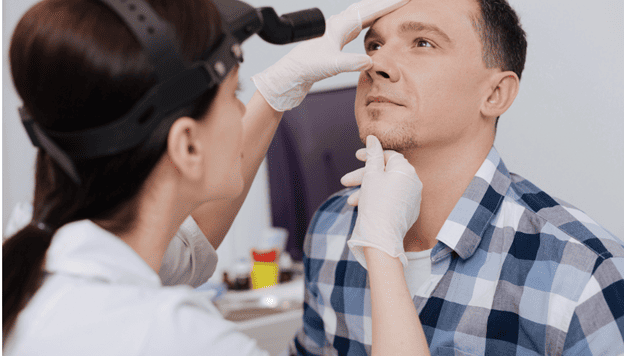
Dr. Zadeh may use nasal endoscopy to examine the septum, turbinates, and other structures inside the nose. A small endoscope provides a direct view of areas that cannot always be adequately assessed from symptoms alone. This can show whether a deviated septum, turbinate enlargement, or another nasal finding is restricting airflow.
If a structural problem is identified, treatment is guided by what is actually causing the obstruction. Septoplasty may be considered when a deviated septum is significantly affecting nasal breathing. If enlarged turbinates are also contributing, turbinate treatment may be discussed. Symptoms that point beyond the nasal airway may require additional sleep evaluation.
What to Expect From Septoplasty
Septoplasty is performed inside the nose to correct portions of septal cartilage and bone that interfere with airflow while preserving the structures needed to support the nose. Because the surgery addresses the internal septum, its purpose is to improve nasal function rather than change the external appearance of the nose.
Dr. Zadeh performs septal procedures for patients with nasal airway obstruction in Los Angeles. Septoplasty is commonly performed on an outpatient basis, but the surgical technique and postoperative care vary according to the patient’s anatomy and the extent of correction required.
Swelling inside the nose can temporarily affect breathing during early recovery. Instructions for nasal care, physical activity, follow-up appointments, and returning to normal routines are based on the procedure performed and how the individual patient is healing. Whether splints or packing are used can also vary, so patients should discuss those details before surgery rather than expecting every septoplasty recovery to be identical.
Evaluating Snoring and Nasal Obstruction in Los Angeles
For someone who snores and also struggles to breathe comfortably through the nose, identifying the nasal problem is an important first step. Dr. Mani H. Zadeh’s Los Angeles practice focuses on ENT, sinus, and nasal airway conditions, including deviated septum, turbinate enlargement, and nasal obstruction.
Nasal endoscopy can provide a closer look at the internal airway when appropriate. Combined with the patient’s symptoms and examination, those findings can establish whether structural nasal obstruction is present and guide treatment decisions.
Septoplasty enters the discussion when the septum is contributing to meaningful nasal obstruction. It is not a general treatment for everyone who snores. When symptoms suggest obstructive sleep apnea or another sleep-related problem, further evaluation may be needed rather than assuming the nose is the only source.
Also Read: Septoplasty for a Deviated Septum That Blocks Both Nasal Passages
Frequently Asked Questions
Does a Deviated Septum Always Cause Snoring?
No. Many people have some degree of septal deviation without significant snoring or breathing problems. A deviated septum is more likely to contribute to nighttime symptoms when it restricts nasal airflow, particularly when other factors such as turbinate enlargement or congestion are also present.
Will Septoplasty Surgery Cure My Snoring Completely?
Not necessarily. Septoplasty may reduce snoring when nasal obstruction from a deviated septum is an important contributor, but it cannot correct every source of snoring. Throat anatomy and obstructive sleep apnea, among other factors, may continue to cause snoring even when nasal airflow improves.
What Is the Difference Between a Deviated Septum and Sleep Apnea?
A deviated septum is a structural problem inside the nose that can restrict nasal airflow. Obstructive sleep apnea is a sleep disorder involving repeated narrowing or collapse of the upper airway during sleep. A person can have both conditions, but they require different evaluations and may require different treatments.
How Long Is Recovery After Septoplasty?
Recovery varies according to the extent of surgery and the individual patient. Septoplasty is commonly performed as an outpatient procedure, but internal swelling can temporarily affect nasal breathing during the early healing period. Your surgeon can provide more specific guidance based on the procedure performed and your progress after surgery.
Does Insurance Cover Septoplasty for a Deviated Septum?
Insurance coverage for septoplasty varies by plan. Some plans may provide coverage when septoplasty meets their medical-necessity criteria for documented nasal obstruction, but requirements differ by insurer and policy. Patients should review their benefits and any authorization requirements before scheduling surgery.
How Do I Know Whether My Deviated Septum Is Contributing to Snoring?
Persistent nasal blockage, difficulty breathing through one side of the nose, and nighttime mouth breathing can suggest that nasal obstruction is contributing to snoring, but symptoms alone cannot confirm the cause. An ENT examination can assess the septum and other nasal structures. If symptoms also raise concern for sleep apnea, additional sleep evaluation may be appropriate.
Schedule an Evaluation With Dr. Mani H. Zadeh
Snoring accompanied by nasal blockage or mouth breathing may have a nasal component, but the septum is not always the only factor involved. An examination can identify whether a deviated septum, enlarged turbinates, or another nasal problem is restricting airflow and whether septoplasty is reasonable to consider.
If you have persistent snoring along with difficulty breathing through your nose, schedule an evaluation with Dr. Mani H. Zadeh in Los Angeles to discuss your symptoms and treatment options. If your symptoms point toward obstructive sleep apnea or another sleep-related condition, further evaluation may also be recommended.
CONTACT MANI H. ZADEH, M.D.[Text Wrapping Break] Mani H. Zadeh, M.D., FACS[Text Wrapping Break] Website: zadehmd.com[Text Wrapping Break] Specialty: Otolaryngology and Advanced Sinus Surgery | Los Angeles, CA
This guide provides general medical educational information and is not a substitute for individualized medical advice. Diagnosis, treatment recommendations, and surgical outcomes vary according to the patient’s symptoms, anatomy, and medical history.