
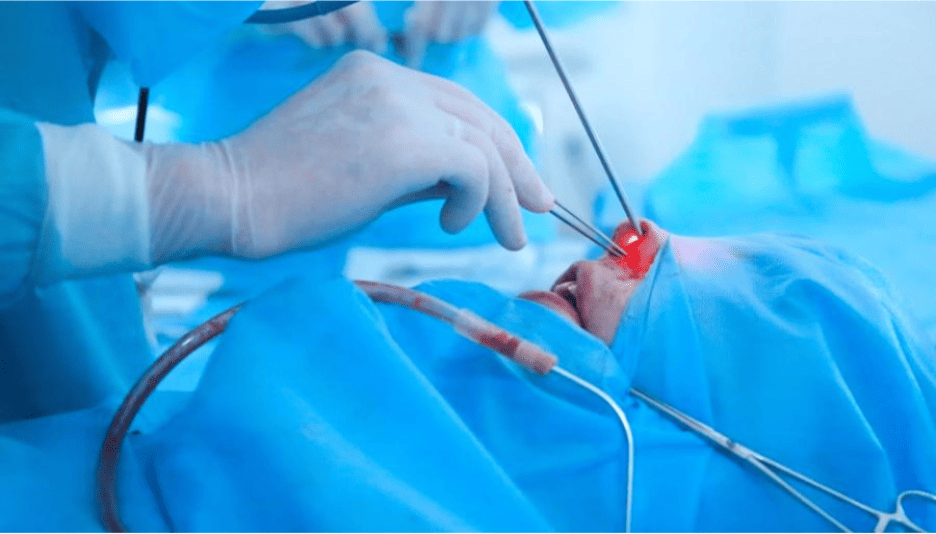
If sinus pressure, congestion, facial pain, headaches, or recurrent infections continue despite medication, you may be wondering whether balloon sinuplasty or traditional sinus surgery is the better approach. The answer depends on what is causing the blockage. Balloon Sinuplasty widens selected sinus openings with a small balloon while preserving the surrounding tissue. Functional Endoscopic Sinus Surgery (FESS) uses an endoscope and surgical instruments to remove blockages or diseased tissue and open the sinus drainage pathways.
Dr. Mani Zadeh evaluates chronic sinusitis and structural nasal problems using the patient’s history, nasal examination, nasal endoscopy, and CT imaging. He can help identify inflammation, polyps, drainage problems, and anatomical blockages before a surgical approach is selected.
The important distinction is that balloon sinuplasty primarily widens a narrowed sinus opening, while FESS gives the surgeon access to remove tissue, polyps, bone, or other obstructions when those problems are present. In some cases, balloon dilation and endoscopic surgery may also be used together.
What Is Balloon Sinuplasty?
Balloon sinuplasty is an in-office, minimally invasive sinus procedure that uses a small balloon catheter to widen a blocked sinus opening without cutting or removing bone or tissue. Dr. Zadeh typically performs the procedure with a local anesthetic, although general anesthesia may be used when appropriate.
The procedure is performed through the nostril rather than through an external incision. A thin endoscope provides a magnified view of the nasal cavity and sinus opening. Dr. Zadeh then guides a catheter toward the affected sinus and places a small balloon at the narrowed passageway.
The basic sequence is:
- Local or, when needed, general anesthesia is administered.
- A thin endoscope is passed through the nose to view the sinus opening.
- A catheter is guided through the nasal passage toward the affected sinus.
- A small balloon is passed over the catheter.
- The balloon is inflated to widen and restructure the walls of the sinus passageway.
- The sinus is cleansed, and the balloon and catheter are removed.
- The patient goes home after the procedure.
Balloon sinuplasty may be considered for selected patients with chronic or recurrent sinusitis who have not improved sufficiently with medical treatment and whose sinus obstruction can be addressed through dilation. It does not remove nasal polyps or correct structural problems such as a deviated septum, so patients with those conditions may require additional or different treatment.
Balloon sinuplasty may be considered for selected patients with chronic or recurrent sinusitis who have not improved sufficiently with medical treatment and whose sinus obstruction can be addressed through dilation. It does not remove nasal polyps or correct structural problems such as a deviated septum, so patients with those conditions may require additional or different treatment.
The American Academy of Otolaryngology-Head and Neck Surgery states that sinus ostial dilation may be used for selected patients with chronic or recurrent acute rhinosinusitis who have not responded adequately to medical treatment. The diagnosis should be supported by clinical findings, nasal endoscopy, and/or CT evidence.
Also Read: Can Balloon Sinuplasty Replace Sinus Surgery for Chronic Sinusitis?
What Is Traditional Sinus Surgery (FESS)?
Traditional Sinus Surgery, or Functional Endoscopic Sinus Surgery (FESS), is an endoscopic procedure used to open obstructed sinus drainage pathways and remove disease or structures that are preventing normal sinus function. Endoscopic sinus surgery is performed under general anesthesia.
During FESS, Dr. Zadeh guides an endoscope through the nostril and uses surgical instruments through the endoscope to address the blockage. Depending on the patient’s anatomy and disease, treatment may involve removing nasal polyps, scar tissue, diseased tissue, or portions of obstructing bone. The procedure can address the maxillary, ethmoid, frontal, and sphenoid sinuses.
FESS may be considered when chronic sinusitis continues despite medical treatment or when structural or inflammatory problems require more than dilation alone. Dr. Zadeh lists nasal polyps, deviated septum, scar tissue, chronic infections, nasal tumors, and sinusitis complications among conditions that may require endoscopic sinus surgery.
The AAO-HNS clinical indicators also identify medically refractory chronic rhinosinusitis, recurrent acute rhinosinusitis, nasal polyposis, allergic fungal rhinosinusitis, certain areas of sinus opacification, and complications involving nearby structures among circumstances in which endoscopic sinus surgery may be considered.
Head-to-Head Comparison: Balloon Sinuplasty vs. Traditional Sinus Surgery
Balloon sinuplasty and FESS both use endoscopic visualization, but they address sinus obstruction in different ways. Balloon sinuplasty widens selected sinus openings without removing tissue, while FESS allows the surgeon to remove tissue, polyps, bone, or other obstructions when indicated.
| Feature | Balloon Sinuplasty | Traditional Sinus Surgery (FESS) |
|---|---|---|
| Anesthesia | Usually local anesthesia in the office; general anesthesia may be used when needed | General anesthesia at Dr. Zadeh’s practice |
| Surgical technique | Balloon catheter widens the sinus opening without tissue removal | Endoscopic instruments remove blockages, polyps, diseased tissue, or obstructing structures |
| Procedure setting | In-office surgical suite in appropriate cases | Outpatient surgical setting |
| Areas treated | Selected sinus drainage openings | Can address the maxillary, ethmoid, frontal, and sphenoid sinuses |
| Recovery | Most patients return to normal activities within about 24 hours | Activity restrictions may continue during the first two weeks |
| Best suited to | Selected chronic sinusitis cases without major polyps or structural blockage | More extensive sinus disease, polyps, structural obstruction, or disease requiring tissue removal |
| Can procedures be combined? | Yes, balloon dilation may be used with other endoscopic techniques | May include balloon dilation as part of a combined approach |
The two procedures are not simply competing versions of the same treatment. The appropriate approach depends on what the endoscopy and CT scan show. Neither procedure is universally superior. The appropriate approach depends on the patient’s anatomy, diagnosis, extent of disease, and the specific sinuses involved.
Also Read: Balloon Sinuplasty: A Minimally Invasive Fix for Chronic Sinusitis
Who Is an Ideal Candidate for Balloon Sinuplasty?
A good balloon sinuplasty candidate generally has chronic or recurrent sinus symptoms that have not improved sufficiently with medical treatment and has sinus blockage that can be addressed by widening the affected drainage opening.
Patients may be considered when they have symptoms such as:
- Ongoing nasal congestion
- Sinus pressure or facial pain
- Recurrent sinus infections
- Headache or facial pressure associated with sinus inflammation
- Difficulty breathing through the nose
- Postnasal drainage
- Symptoms that continue despite medication
Balloon sinuplasty is generally best suited to selected patients whose primary problem is narrowing or obstruction of a sinus drainage pathway that can be treated with dilation alone. Extensive nasal polyps, disease requiring tissue removal, or structural problems that require surgical correction may make FESS or a combined approach more appropriate.
A patient seeking less downtime may also find the in-office approach appealing. However, wanting a short recovery period does not by itself make someone a candidate. CT imaging and nasal endoscopy help show whether the sinus openings can be treated with balloon dilation. The AAO-HNS likewise recommends objective evidence from nasal endoscopy and/or CT when considering sinus ostial dilation.
Who Requires Traditional Endoscopic Sinus Surgery?
FESS may be considered when sinus disease involves polyps, extensive inflammatory disease, fungal disease, or obstruction that cannot be adequately treated with balloon dilation alone. Additional structural procedures, such as septoplasty, may be performed when needed.
Examples include:
- Significant nasal polyps blocking sinus passages
- A deviated septum or other structural problem that may require septoplasty or another procedure in addition to sinus surgery
- Scar tissue or other obstructing structures
- Allergic fungal sinusitis
- Chronic sinus disease involving multiple sinus regions
- Recurrent disease that has not responded to medical treatment
- Sinusitis complications involving nearby structures
- Disease involving the ethmoid sinuses, which balloon sinuplasty does not treat
FESS also gives the surgeon access to tissue that may need to be removed or examined. This makes it different from a balloon-only procedure, which is designed to widen the sinus opening while preserving the surrounding tissue.
Recovery, Downtime, and Results: What Patients Can Expect
Recovery is generally shorter after balloon sinuplasty than after FESS, but the exact experience varies by the procedure performed and the patient’s condition. Dr. Zadeh’s practice reports that most balloon sinuplasty patients return to normal activities within about 24 hours. Patients are advised to avoid vigorous exercise and nose-blowing for one to two days. Mild drainage, congestion, or fatigue may occur and generally improve within the following week.
After FESS, patients can expect more postoperative care because tissue and obstructions have been surgically treated. Dr. Zadeh advises activity limitations during the first two weeks.
Patients should follow the specific postoperative instructions provided by their surgeon rather than relying on a fixed recovery calendar. Recovery can differ based on the number of sinuses treated, whether polyps or structural problems were addressed, and whether additional nasal procedures were performed.
The long-term picture also differs from patient to patient. Balloon sinuplasty can provide lasting improvement for appropriately selected patients, but chronic sinus disease can recur. FESS is also not a guarantee that sinus symptoms will never return. The underlying inflammatory condition may still require ongoing medical treatment and follow-up.
How Dr. Mani H. Zadeh Determines Your Optimal Treatment Plan
Dr. Mani H. Zadeh determines the appropriate surgical approach by combining the patient’s symptom history with direct examination of the nasal passages and imaging of the sinus anatomy. His practice uses nasal endoscopy and CT imaging as part of the evaluation of nasal and sinus disorders.
Nasal endoscopy allows Dr. Zadeh to directly inspect the nasal passages and look for inflammation, polyps, drainage problems, and anatomical abnormalities. CT imaging provides a three-dimensional view of the sinus cavities and can show narrowed or blocked drainage pathways and the extent of sinus disease.
The evaluation also considers previous medical treatment. Balloon Sinuplasty and FESS are generally considered after medical treatment has not provided sufficient relief in patients with documented sinus disease. The AAO-HNS recommends symptoms plus objective evidence from nasal endoscopy and/or CT when evaluating candidates for sinus surgery or sinus ostial dilation.
Dr. Zadeh is board-certified in Otolaryngology-Head and Neck Surgery and has a rhinology subspecialty focused on nasal and sinus disorders.
Also Read: Is Balloon Sinuplasty Right for You? The Key to Breathing Easier
CONCLUSION
Balloon sinuplasty and FESS can both be used to treat chronic sinus disease, but they are designed for different clinical situations. Balloon sinuplasty widens selected sinus openings without removing tissue and is often performed in the office with local anesthesia. FESS provides broader surgical access and allows the surgeon to remove polyps, diseased tissue, bone, scar tissue, or other obstructions when necessary.
The right procedure cannot be determined from symptoms alone. Nasal anatomy, CT findings, nasal polyps, the extent of inflammation, previous medical treatment, and the specific sinuses involved all matter. In some cases, balloon dilation and endoscopic surgery can be combined.
Patients in Los Angeles and Century City who continue to experience sinus pressure, congestion, facial pain, recurrent infections, or blocked drainage despite medical treatment can schedule an evaluation with Dr. Mani H. Zadeh.
FAQs
1. Is Balloon Sinuplasty as effective as traditional sinus surgery?
Balloon sinuplasty can provide meaningful symptom relief for appropriately selected patients with chronic sinusitis, particularly when the main problem is a blocked sinus opening, and there are no major polyps or structural abnormalities. FESS can address a broader range of disease because it allows removal of polyps, diseased tissue, bone, or other obstructions. Research has found both approaches can benefit selected patients, but the procedures are not interchangeable.
2. Is Balloon Sinuplasty painful?
Balloon sinuplasty can be performed under local or topical anesthesia. Discomfort after the procedure varies depending on the sinus treated and whether additional procedures are performed.
3. Will I need general anesthesia for Balloon Sinuplasty?
Not usually when the procedure is performed in Dr. Zadeh’s practice office. Dr. Zadeh typically performs Balloon Sinuplasty with a local anesthetic, although general anesthesia may be used in selected circumstances.
4. How long does recovery take after Balloon Sinuplasty versus FESS?
Most balloon sinuplasty patients return to normal activities within about 24 hours, with some restrictions for the first one to two days. FESS generally involves a longer recovery, with activity limitations during the first two weeks.
5. Can Balloon Sinuplasty remove nasal polyps?
No. Balloon sinuplasty widens sinus openings without removing tissue. When nasal polyps obstruct the sinus passages, FESS or nasal polyp surgery may be needed to remove them.
6. How long do the results of Balloon Sinuplasty last?
Balloon sinuplasty can provide lasting symptom improvement for appropriately selected patients, but results vary and chronic sinus disease can recur. Some patients continue to need medical treatment or follow-up for underlying inflammation, allergies, or other contributing conditions.
7. Can Balloon Sinuplasty fix a deviated septum?
No. Balloon sinuplasty widens selected sinus drainage openings but does not straighten the nasal septum. When a deviated septum contributes significantly to nasal or sinus obstruction, septoplasty may be considered alone or alongside sinus surgery depending on the patient’s anatomy and other findings
8. What are the risks or complications associated with Balloon Sinuplasty?
Balloon sinuplasty is minimally invasive, but it is still a medical procedure with potential risks. Published data have reported complications including bleeding, orbital complications, cerebrospinal fluid leak, and pneumocephalus, although major complications are uncommon. Your surgeon should review the risks that apply to your anatomy and planned procedure.
9. What are the risks associated with traditional endoscopic sinus surgery?
FESS involves surgical removal or alteration of tissue and structures within the nasal and sinus passages, so risks can include bleeding, infection, scarring, changes in smell, and injury to nearby structures. The specific risk profile depends on the sinuses treated and the patient’s anatomy. A surgical consultation should cover the risks associated with the planned procedure.
10. Is Balloon Sinuplasty covered by health insurance and Medicare?
Coverage varies by insurance plan, medical necessity criteria, procedure type, and where the treatment is performed. The AAO-HNS supports coverage consideration for balloon sinus ostial dilation when clinical criteria are met, but individual payer policies still apply.
11. How do I know if my sinus condition requires surgery or just medication?
Surgery is generally considered when chronic or recurrent sinus disease continues despite appropriate medical treatment and there is objective evidence of sinus disease. Dr. Zadeh reviews symptoms, previous treatment, nasal endoscopy findings, and CT imaging before deciding whether surgery is appropriate.
12. What diagnostic tests are needed before deciding on sinus surgery?
The evaluation may include a medical history, nasal examination, diagnostic nasal endoscopy, and CT imaging of the sinuses. Dr. Zadeh may also use sinus cultures or allergy testing when clinically indicated.
The AAO-HNS identifies nasal endoscopy and CT imaging as important parts of evaluating patients for endoscopic sinus surgery and sinus ostial dilation.
13. How soon after Balloon Sinuplasty can I return to work or exercise?
Most patients return to normal activities within about 24 hours. Vigorous exercise and nose-blowing should generally be avoided for one to two days, according to the practice’s postoperative guidance. Your individual instructions may differ depending on whether other procedures were performed.
14. Can Balloon Sinuplasty be repeated if sinus issues return?
A repeat procedure may be considered in some patients, but the reason for recurring symptoms needs to be evaluated first. Repeat nasal endoscopy and CT imaging may help determine whether the issue is recurrent sinus inflammation, a new blockage, polyps, or another anatomical problem. The appropriate treatment depends on those findings.
15. Why should I choose Dr. Mani H. Zadeh for my sinus procedure in Los Angeles?
Dr. Mani H. Zadeh is a board-certified Otolaryngologist-Head and Neck Surgeon with a rhinology subspecialty focused on nasal and sinus disorders. His Century City practice provides balloon sinuplasty, nasal endoscopy, sinus surgery, septoplasty, nasal polyp surgery, and other treatments for nasal and sinus conditions.
His evaluation process combines symptom history, nasal endoscopy, CT imaging, and consideration of previous medical treatment before a surgical approach is selected. Patients considering balloon sinuplasty or FESS can contact the Century City office to discuss their symptoms and arrange an evaluation.