
Deviated Septum Symptoms: How to Self-Test and What to Watch For
If you’ve been dealing with one-sided nasal congestion, frequent sinus infections, or trouble breathing at night, a deviated septum could be the reason. A deviated septum occurs when the cartilage and bone wall between your nostrils shifts off-center, making one nasal passage smaller than the other. You can’t always see it when looking in a mirror, but a simple at-home self-test combined with the symptom checklist below can help you decide whether it’s worth talking to a specialist.
Try This At-Home Self-Test
This test won’t give you a diagnosis, but it’s a quick way to check for uneven airflow between your nostrils:
-
Gently press one nostril closed with a finger and breathe in slowly through the open side.
-
Release, then press the other nostril closed and breathe in through that side.
-
Compare the two: is airflow noticeably harder, slower, or more restricted on one side?
-
Repeat a few times, since congestion from a cold or allergies can temporarily skew the results.
If one side is consistently harder to breathe through, that’s a sign — though not final proof — that your septum may be deviated.
Deviated Septum Symptom Checklist
Alongside the self-test, check whether you regularly experience any of the following:
-
Nasal congestion or blockage that’s worse on one side
-
Frequent nosebleeds
-
Recurring sinus infections or sinus pressure
-
Snoring or noisy breathing during sleep
-
Trouble sleeping, or waking up feeling like you can’t get enough air
-
Headaches or facial pain, especially around the sinuses
-
Breathing through your mouth, especially at night
-
A nose that looks visibly crooked or off-center
The more of these you check off, the more reason to investigate a deviated septum — but keep in mind that several of these symptoms overlap with other common conditions.
When a Self-Test Isn’t Enough
A deviated septum can mimic seasonal allergies or a lingering common cold, which is why an at-home check is a starting point, not a diagnosis. To know for certain, an ENT will typically use a nasal endoscopy or sinus CT imaging to see exactly where and how the septum is deviated.
How Dr. Zadeh Diagnoses and Treats a Deviated Septum
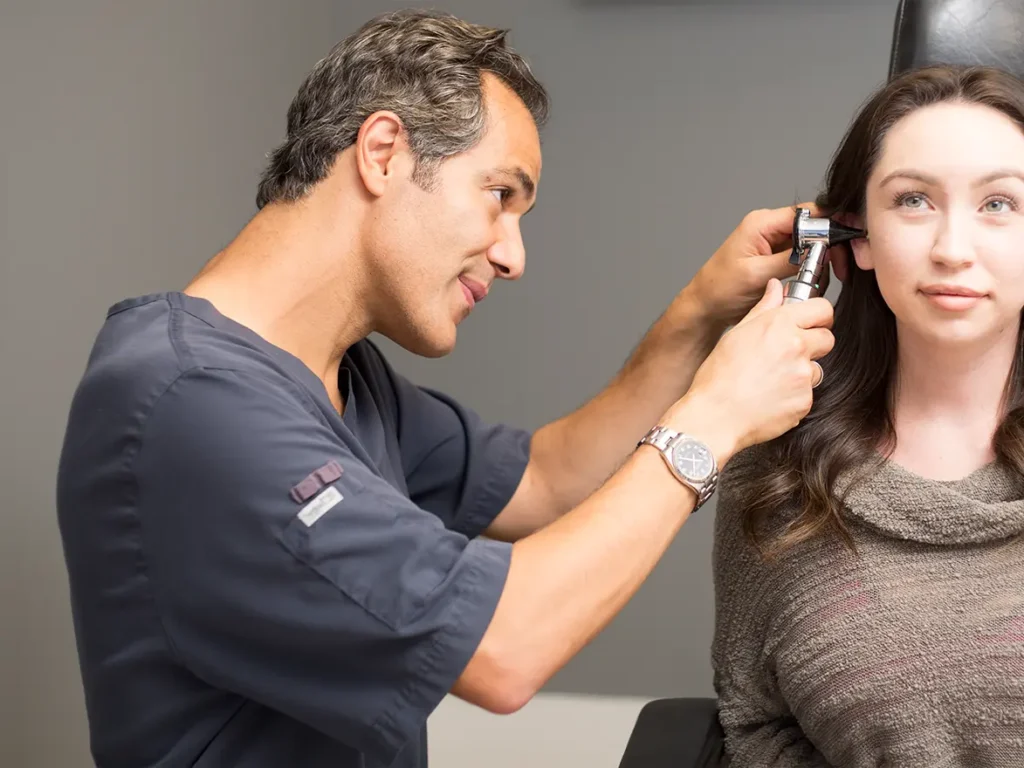
During a consultation, Dr. Zadeh reviews your symptoms and medical history and performs an exam to see whether a deviated septum, or another condition, such as sinusitis, is behind what you’re experiencing. Many people with a deviated septum manage it well with medication or nasal sprays and never need surgery. When symptoms are more disruptive to breathing, sleep, or quality of life, septoplasty surgery for a deviated septum is typically the most effective option. It’s an outpatient procedure, performed entirely through the nostrils with no external incisions, and most patients return to normal activities within about a week.
Schedule a consultation with Dr. Zadeh to find out whether your symptoms are due to a deviated septum and what treatment options are right for you.
Deviated Septum FAQs
What causes a deviated septum?
Most people are born with a straight septum that gradually shifts with age, though injury to the nose, including birth trauma, can also cause or worsen a deviation. In many cases, there’s no clear injury behind it at all.
Can a deviated septum get better without surgery?
Mild cases are often manageable with decongestants, antihistamines, or nasal steroid sprays. These don’t correct the deviation itself, but they can reduce the swelling and congestion that make symptoms noticeable.
How do I know if I need septoplasty instead of just managing symptoms?
If medication and nasal sprays no longer control your symptoms, or if you’re dealing with chronic sinus infections, ongoing sleep disruption, or persistent breathing trouble, it’s worth discussing septoplasty with an ENT. A physical exam and imaging are the only reliable way to confirm whether surgery is the right next step.
Is septoplasty painful, and what does recovery look like?
Most patients describe more pressure and congestion than sharp pain in the days after surgery. The procedure itself takes about 60 to 90 minutes, is done on an outpatient basis, and most people are back to work or school within roughly a week, with full healing taking a bit longer.
Does insurance cover septoplasty?
Septoplasty is typically considered medically necessary when it’s addressing a breathing obstruction, which means many insurance plans do provide coverage. Coverage details vary by plan, so it’s best to contact our office to confirm your specific benefits.
Think you might have a deviated septum? Contact Dr. Zadeh’s office or call 310-286-0123 to schedule a consultation.